

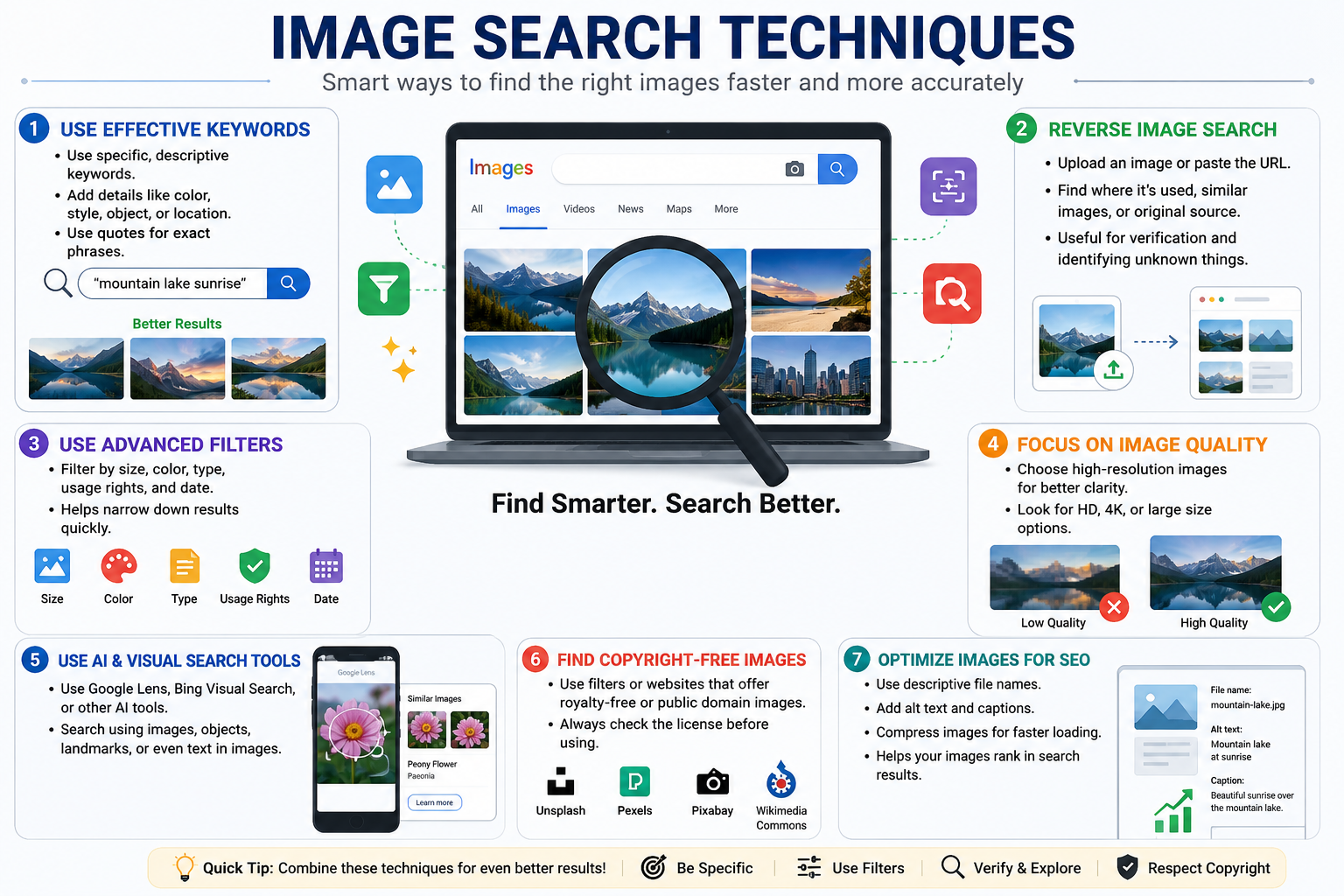
Image Search Techniques The internet is filled with billions of images, and finding the exact one you need can sometimes feel impossible. Whether you are a student, content creator, marketer, blogger, designer, or casual internet user, understanding modern image search techniques can save time and improve the quality of your Search Many people simply type a few words into a search engine and hope for the best, but professional users know that there are smarter ways to search.
Image search has evolved far beyond basic keyword matching. Today, search engines use artificial intelligence, visual recognition, metadata, and advanced filters to help users discover relevant images faster. Learning how these systems work gives you a major advantage when searching for high-quality visuals, identifying sources, checking authenticity, or locating copyright-free content.
In this article, we will explore the most effective image search techniques, explain how professionals use them, and share practical tips that can dramatically improve your results.
Understanding How image search techniques
Before diving into advanced techniques, it helps to understand the basics of how image search engines function. Platforms like Google, Microsoft, and other image search techniques providers use automated systems called crawlers to scan websites and index images. These systems analyze file names, surrounding text, alt tags, captions, and even the visual content itself.
Modern image search techniques engines rely heavily on AI-powered image recognition. Instead of only reading text attached to an image, algorithms can now identify objects, colors, faces, landmarks, and patterns directly within the image. This is why you can upload a picture of a shoe and instantly find similar products online.
Another important factor is metadata. Many images contain hidden information such as camera settings, upload dates, location data, and creator details. Search engines may use this information to organize and rank results. Understanding these technical elements can help you search more strategically.
Using Keywords Effectively in image search techniques
One of the simplest yet most overlooked image search techniques is using precise keywords. Generic image search techniques often produce millions of unrelated results, while targeted phrases narrow the search dramatically.
For example, searching “car” may return everything from sports cars to cartoons. However, searching “red vintage convertible sports car at sunset” provides far more accurate results. The more descriptive your query, the better the search engine understands your intent.
Long-tail keywords are especially powerful for image searches. Instead of image search techniques office desk,” you might search “minimalist wooden office desk with dual monitors.” This approach is commonly used by designers and bloggers looking for specific visual styles.
Keyword placement also matters. Some search engines prioritize the first words in your query, so placing the most important detail first can improve relevance. Professionals often experiment with multiple keyword combinations to find the best results.
Reverse Image Search Techniques
Reverse image search is one of the most valuable tools available online today. Instead of searching with text, you upload an image to discover similar visuals, identify objects, or locate the original source.
This technique is widely used for verifying authenticity. Journalists, researchers, and investigators often use reverse image search to determine whether a photo has been altered, reused, or taken out of context. It is also useful for spotting fake social media content.
Another common use is identifying unknown products, locations, or people. For example, if you see an interesting piece of furniture online but do not know its name, uploading the image can help you locate stores selling it.
Content creators also use reverse image search to track unauthorized usage of their photos. Photographers frequently discover where their images appear online by running reverse searches through major search engines.
Advanced Search Filters for Better Results
Most users ignore advanced image search filters, but they can significantly improve search quality. These filters allow you to narrow results by size, color, type, usage rights, and upload date.
Image size filters are particularly useful for marketers and web designers. If you need high-resolution visuals for printing or large displays, selecting “large images” prevents low-quality results from cluttering your search.
Color filters help when image search techniques for visually consistent branding or themed content. Designers often search for images with specific color palettes to match websites, advertisements, or presentations.
Usage rights filters are extremely important for avoiding copyright issues. image search techniques engines often allow users to filter images labeled for reuse, modification, or commercial purposes. This is essential for bloggers, businesses, and social media managers who need legal access to visuals.
Date filters can also help locate recent images or track visual trends over time. News researchers and journalists frequently use this feature to find the latest photos related to current events.
image search techniques by Image Quality and Resolution
Finding visually appealing images requires more than just matching keywords. Professionals pay close attention to image quality, sharpness, and resolution during searches.
High-resolution images are ideal for printing, editing, and professional presentations. Low-resolution files may appear blurry or pixelated when enlarged. Many users refine searches by adding terms such as “4K,” “HD,” or “high resolution” to improve quality.
Aspect ratio is another important consideration. Wide images work better for banners and websites, while square images are ideal for social media platforms like Instagram.
File type searches can also be helpful. PNG files usually support transparent backgrounds, while JPEG images are more common for photography. Designers and editors often search specifically for PNG images when creating graphics or overlays.
Using AI-Powered Visual Search Tools
Artificial intelligence has transformed the way people search for images online. AI-powered visual search tools can now recognize objects, styles, clothing, landmarks, and even artistic themes with impressive accuracy.
Platforms such as Google Lens allow users to point a smartphone camera at an object and instantly receive related information. This technology is especially useful for shopping, education, and travel.
Fashion retailers use visual search systems to help customers find similar clothing items. Users can upload a photo of a jacket or shoes and instantly browse visually related products.
AI search tools are also becoming popular in education. Students can photograph plants, animals, historical landmarks, or handwritten equations to receive explanations and related content. These advancements continue to make image search more interactive and intelligent.
Finding Copyright-Free and Royalty-Free Images
One of the biggest challenges online creators face is finding images they can legally use. Copyright laws protect most online images, meaning they cannot simply be copied without permission.
Fortunately, several platforms offer royalty-free or public-domain images. These resources are widely used by bloggers, businesses, YouTubers, and digital marketers.
When searching for reusable images, it is important to check licensing information carefully. Some images require attribution, while others are completely free for commercial use. Misusing copyrighted visuals can lead to legal complications or content removal.
Creative Commons licensing systems have also made image sharing more flexible. Many creators intentionally allow their work to be reused under specific conditions. Understanding these licenses is an essential image search skill for professionals.
Image Search Techniques for SEO and Content Marketing
Image search is not only useful for finding visuals; it also plays a major role in search engine optimization. Websites can attract traffic directly from image search results when their images are properly optimized.
SEO professionals often use keyword-rich file names, descriptive alt text, and optimized captions to improve image visibility. Search engines rely on these elements to understand visual content.
Compressed image sizes are another important factor. Large files can slow down websites, negatively affecting user experience and search rankings. Proper optimization balances quality and performance.
Unique visuals tend to perform better than overused stock photos. Many marketers now create custom graphics, infographics, and branded images to stand out in image search results.
Common Mistakes People Make During Image Searches
Even experienced users sometimes make mistakes that limit their search effectiveness. One common issue is using vague keywords that generate overly broad results.
Another mistake is ignoring source credibility. Not every image online is authentic or accurately labeled. Reverse image search can help verify whether a picture is legitimate.
People also frequently overlook licensing details. Just because an image appears in search results does not mean it is free to use. Always confirm copyright permissions before downloading or publishing visuals.
Finally, many users fail to explore multiple search engines. Different platforms index images differently, so comparing results across multiple tools often leads to better discoveries.
The Future of Image Search Technology
Image search technology continues to evolve rapidly. AI systems are becoming more sophisticated at understanding context, emotions, and visual relationships.
Future search engines may allow users to search using voice commands combined with images. Augmented reality and smart glasses could also integrate real-time visual search into everyday life.
Machine learning models are improving facial recognition, object detection, and scene understanding. These advancements will likely make searches faster, more accurate, and more personalized.
As visual content continues to dominate the internet, image search techniques will become even more important for businesses, researchers, creators, and everyday users.
Final Thoughts
Mastering image search techniques can completely change the way you explore the internet. Instead of wasting time scrolling through irrelevant results, you can use advanced methods to quickly locate accurate, high-quality visuals.
From keyword optimization and reverse image search to AI-powered visual tools and copyright filtering, modern search systems offer powerful features that many users never fully utilize. Learning these techniques not only improves efficiency but also helps you work smarter online.
Whether you are building a website, creating social media content, researching information, or simply searching for inspiration, understanding how image search works gives you a significant advantage. As technology continues to improve, visual search will only become more advanced, making these skills increasingly valuable in the digital world.